July 2027
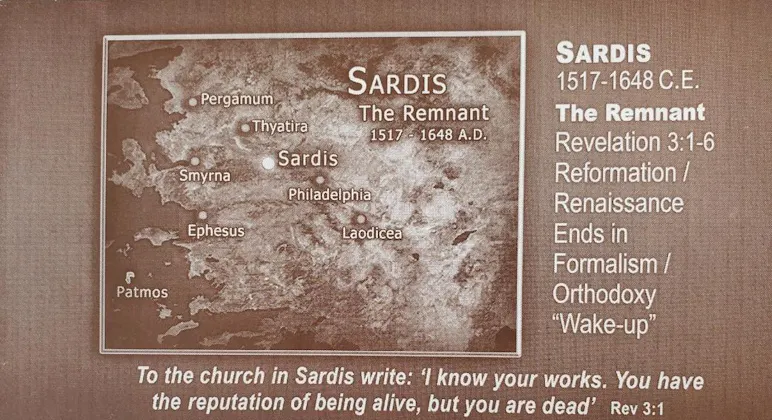
The Remnant – But What About Other Reformers of the 16th Century?
ANTI-SEMITIC RHETORIC INFLUENCES REFORMATION IN EUROPE
· John Calvin 1809-1564 was a young French lawyer, who had served in the Catholic Church from an early age. He became deeply influenced by the Humanism movement in the 1500s. It has been suggested that Calvin converted to the evangelical faith around
1530. In 1535, Calvin was forced to flee France for strongly criticizing the Catholic Church. In time he found refuge in Geneva, Switzerland, where he was convinced by fellow reformer William Farel to stay and assist in reforming the church there.
In 1553, Michael Servetus, who came from a Jewish converso origin of the Spanish Inquisition, challenged Calvin on several theological topics. Calvin was outraged by
Servetus and later was influential in his death by burning alive on a stake. After Servetus' death Calvin was acclaimed a defender of Christianity.
Calvin's view of the Jews and Judaism is debatable. Some say he was very anti-Semitic; however, others argue he was more neutral in comparison to Martin Luther. "Calvin once wrote, ‘I have had much conversation with many Jews: I have never seen either a drop of piety or a grain of truth or ingenuousness - nay, I have never found common sense in any
Jew.' In this respect, he differed little from other Protestant and Catholic theologians of his day."1
1 Wikipedia “John Calvin: Calvin and the Jews" [Online] Available:
https://en.wikipedia.org/wiki/John_Calvin [April 25,2018].